Hard boiled eggs are a healthy, protein-packed snack or meal addition. Peeling them can be tricky, often leaving messy bits of shell behind.
Many people struggle with peeling hard boiled eggs, finding it frustrating and time-consuming. The shell often sticks stubbornly to the egg whites, making the eggs look less appealing and sometimes tearing the delicate whites. Fortunately, there are simple techniques and tips that can make peeling eggs easy, quick, and mess-free, ensuring perfectly smooth eggs for breakfast, salads, or snacks.
Why Hard Boiled Eggs Are Hard to Peel
The main reason peeling hard boiled eggs is difficult lies in the egg’s freshness. Very fresh eggs have a lower pH in the whites, which causes them to adhere more strongly to the inner shell membrane. As eggs age, the pH rises, loosening the bond between the shell and the egg white, making peeling easier.
Other factors, such as cooking method and cooling process, also play a role. Overcooked eggs develop a greenish ring around the yolk, and undercooked eggs can be too soft to handle. Both conditions can make peeling tricky.
Boiling Eggs Techniques for Easy Peeling
Step 1: Choose the Right Eggs
-
Slightly older eggs (about 7–10 days old) peel more easily than fresh eggs.
-
If only fresh eggs are available, don’t worry; we have tips for that too.
Step 2: Boil Properly
-
Place eggs in a saucepan and cover with cold water, about an inch above the eggs.
-
Add a pinch of salt or a splash of vinegar to the water. This helps prevent cracking and makes peeling easier.
-
Bring water to a gentle boil over medium heat.
-
Once boiling, turn off the heat and cover the pan. Let the eggs sit for 9–12 minutes depending on size.
Step 3: Cool Rapidly
After cooking, transfer the eggs immediately into a bowl of ice water or run under cold water for several minutes. Rapid cooling stops the cooking process and causes the egg to contract slightly, pulling it away from the shell for easier peeling.
How to Peel Hard Boiled Eggs
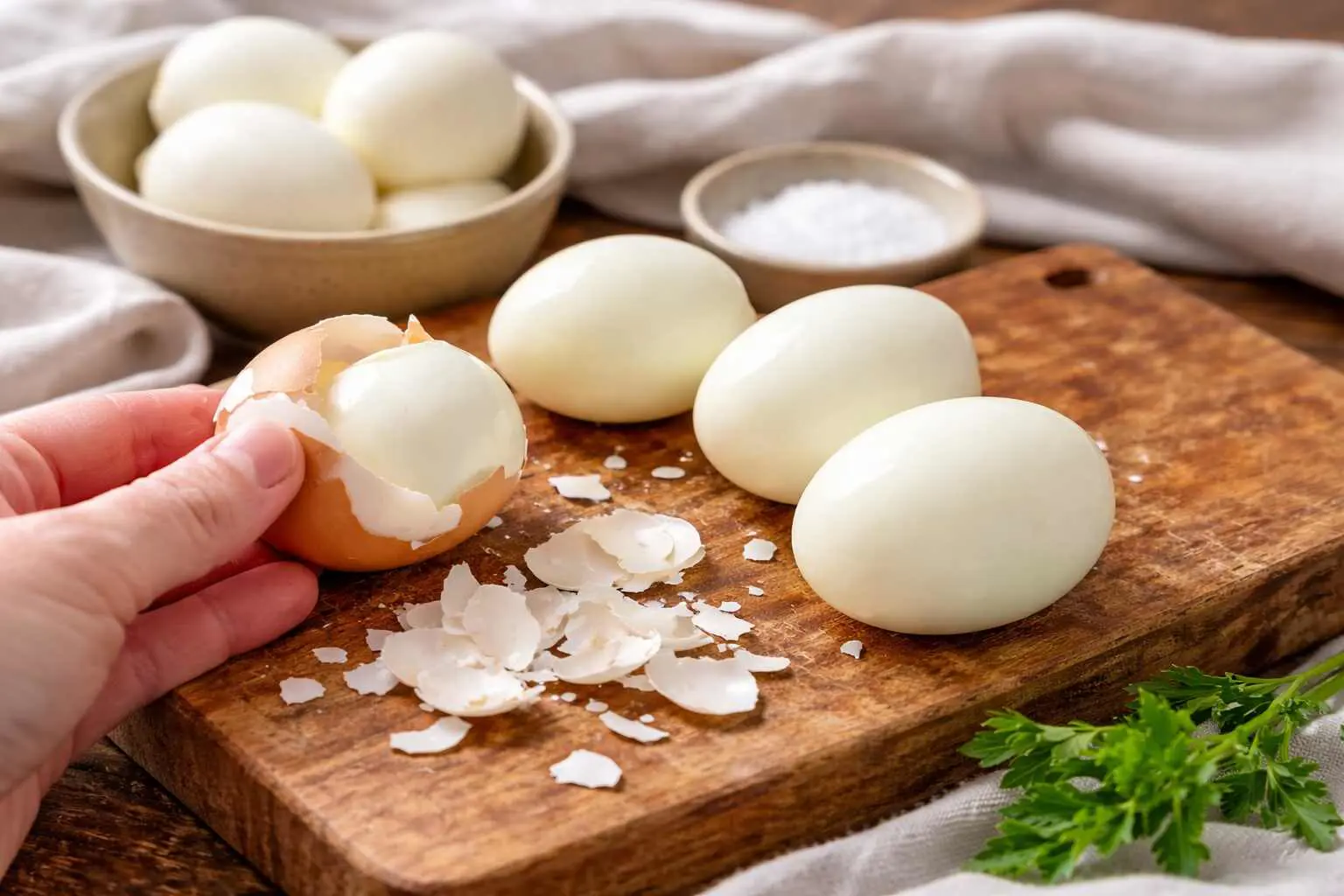
1. Crack and Roll
-
Gently tap the egg on a hard surface to crack the shell all over.
-
Roll it lightly with your palm to loosen the shell.
-
Start peeling from the wider end where the air pocket usually helps separate the shell.
2. Use Water
3. Shake in a Container
4. Spoon Method
5. Baking Soda Trick
Tips for Perfectly Peeled Eggs
-
Use Older Eggs: If possible, buy eggs a week before boiling.
-
Avoid Overcooking: Overcooked eggs are harder to peel and may develop a greenish yolk.
-
Ice Bath: Always cool eggs immediately after boiling.
-
Peel Right Away or Store Properly: Peeling is easiest after cooling, but if storing, keep eggs in the shell in the fridge for up to a week.
-
Experiment with Methods: Every kitchen and egg batch is slightly different; try water, spoon, or shaking methods to see which works best.
Common Mistakes to Avoid
-
Boiling Too Long: Leads to tough whites and green yolks.
-
Skipping the Ice Bath: Eggs continue cooking and become harder to peel.
-
Using Extremely Fresh Eggs Only: Fresh eggs stick more to the shell; slightly older eggs are ideal.
-
Peeling Cold Eggs Too Aggressively: Can tear whites and ruin the appearance.
How to Store Peeled Hard Boiled Eggs
If you need peeled eggs ready for later:
-
Store in an airtight container in the fridge.
-
Cover eggs with a damp paper towel to prevent drying.
-
Consume within 3–5 days for best texture and flavor.
Conclusion
Peeling hard boiled eggs doesn’t have to be a frustrating task. With the right boiling technique, proper cooling, and a few helpful tricks, you can enjoy smooth, perfectly peeled eggs every time. Whether you use the cracking and rolling method, water-assisted peeling, or the spoon technique, these tips make preparing eggs for breakfast, salads, or snacks much easier and more enjoyable.
By understanding why eggs are hard to peel and following these simple strategies, you’ll never have to battle stubborn shells again. Perfectly peeled eggs are just a few steps away!