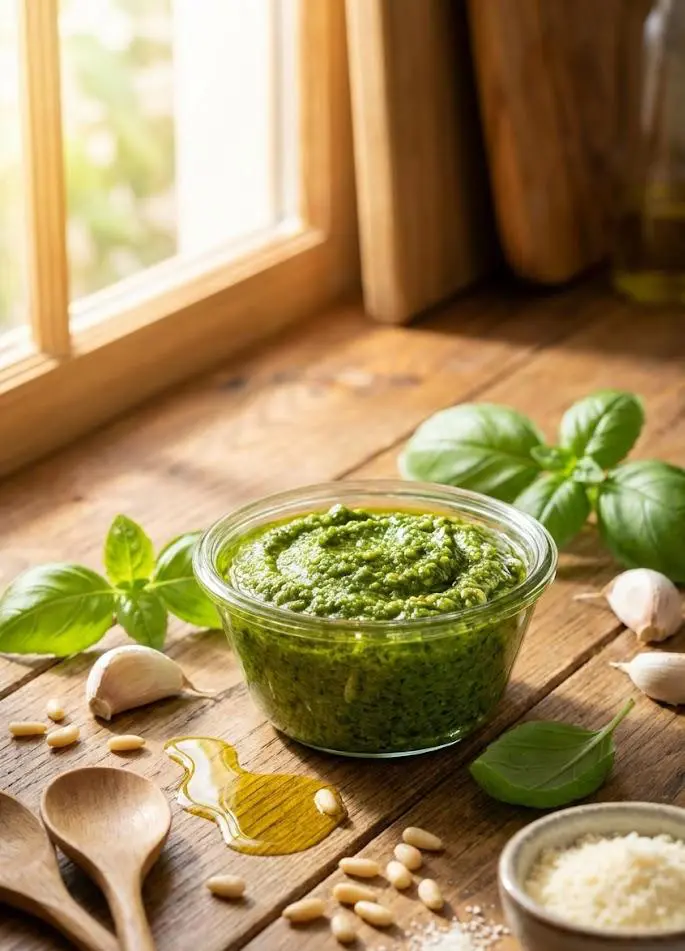
Pesto is one of the most vibrant and versatile sauces you can make at home. With its bright green color, fragrant aroma, and bold flavor, it transforms simple dishes into something extraordinary.
Originating from Genoa in the Liguria region of Italy, traditional pesto, known as Pesto alla Genovese and combines fresh basil, garlic, pine nuts, Parmesan cheese, olive oil, and salt into a smooth, aromatic sauce.
The best part? You can make pesto in just 10 minutes with minimal effort. Let’s explore how to make pesto the right way, plus tips, variations, and serving ideas.
Essential Ingredients:
To make authentic pesto, you need just a handful of fresh, high-quality ingredients:
1. Fresh Basil Leaves
Use sweet basil with bright green leaves. Avoid wilted or bruised leaves.
2. Pine Nuts
These add creaminess and subtle nuttiness. Lightly toasting them enhances their flavor.
3. Garlic
Fresh garlic cloves provide sharpness and depth.
4. Parmesan Cheese
Traditionally, Parmigiano-Reggiano is used. It adds saltiness and umami.
5. Extra Virgin Olive Oil
Use good-quality olive oil for the best flavor and smooth texture.
6. Salt
Enhances all the other flavors.
How to Make Pesto Step by Step
Step 1: Prepare the Ingredients
Wash and thoroughly dry the basil leaves. Peel the garlic cloves. If desired, lightly toast the pine nuts in a dry pan for 2–3 minutes until golden.
Step 2: Blend the Base
In a food processor, add pine nuts and garlic. Pulse until finely chopped.
Step 3: Add Basil
Add fresh basil leaves and pulse again until the mixture becomes a coarse paste.
Step 4: Incorporate Cheese
Add grated Parmesan and pulse briefly to combine.
Step 5: Add Olive Oil
With the processor running, slowly drizzle in olive oil until the pesto reaches a smooth, creamy consistency.
Step 6: Season and Adjust
Taste and add salt if needed. If the pesto feels too thick, add a small amount of olive oil to loosen it.
Your homemade pesto is now ready!
Traditional Method: Using a Mortar and Pestle
If you want the most authentic flavor, try making pesto by hand. In a mortar, crush garlic with a pinch of salt. Add pine nuts and grind until creamy. Gradually add basil leaves, crushing in circular motions. Stir in grated cheese, then slowly mix in olive oil until smooth.
This method takes more time but produces a silkier, more aromatic pesto.
Tips for Perfect Pesto Every Time
-
Dry the basil completely to prevent darkening.
-
Avoid overheating when blending; pulse instead of continuous blending.
-
Add cheese last to maintain texture.
-
Use fresh ingredients—pesto’s flavor depends entirely on quality.
Delicious Ways to Use Pesto
Pesto isn’t just for pasta! Here are some creative serving ideas:
Toss with Pasta
The classic use - mix pesto with freshly cooked pasta and a splash of pasta water for a silky coating.
Spread on Sandwiches
Use pesto as a flavorful spread in wraps, paninis, or grilled cheese.
Drizzle Over Pizza
Swap tomato sauce for pesto as a pizza base.
Mix into Salads
Stir into potato salad or pasta salad for a vibrant twist.
Serve with Vegetables
Use as a dip for roasted vegetables or fresh bread.
Popular Pesto Variations
While basil pesto is the classic version, there are many delicious alternatives:
Spinach Pesto
Replace part of the basil with fresh spinach for a milder flavor.
Sun-Dried Tomato Pesto
Blend sun-dried tomatoes with garlic, nuts, and olive oil for a tangy variation.
Arugula Pesto
Peppery arugula adds bold flavor and works beautifully on grilled meats.
Walnut Pesto
Substitute pine nuts with walnuts for a more budget-friendly option.
How to Store Pesto Properly
Fresh pesto can oxidize and darken quickly. To keep it vibrant:
-
Store in an airtight container.
-
Pour a thin layer of olive oil on top to seal.
-
Refrigerate for up to 5 days.
-
Freeze in ice cube trays for longer storage (up to 3 months).
When freezing, skip the cheese and add it later when serving for best texture.
Nutritional Benefits of Pesto
Pesto isn’t just flavorful and it’s also nutritious. Basil contains antioxidants, olive oil provides heart-healthy fats, and nuts contribute protein and essential minerals. While pesto is calorie-dense due to oil and cheese, moderate portions can fit into a balanced diet.
Common Mistakes to Avoid
-
Using wet basil (causes dark, watery pesto)
-
Over-blending (creates a paste that lacks texture)
-
Adding too much garlic (can overpower the sauce)
-
Skipping quality olive oil (affects overall taste)
Final Thoughts
Learning how to make pesto at home is simple, rewarding, and far more flavorful than store-bought versions. With just a handful of fresh ingredients and a few minutes of preparation, you can create a vibrant, aromatic sauce that enhances everything from pasta to sandwiches.
Whether you choose the traditional mortar-and-pestle method or the convenience of a food processor, homemade pesto brings a taste of Genoa straight to your kitchen. Once you try making it fresh, you’ll never go back to jarred pesto again.