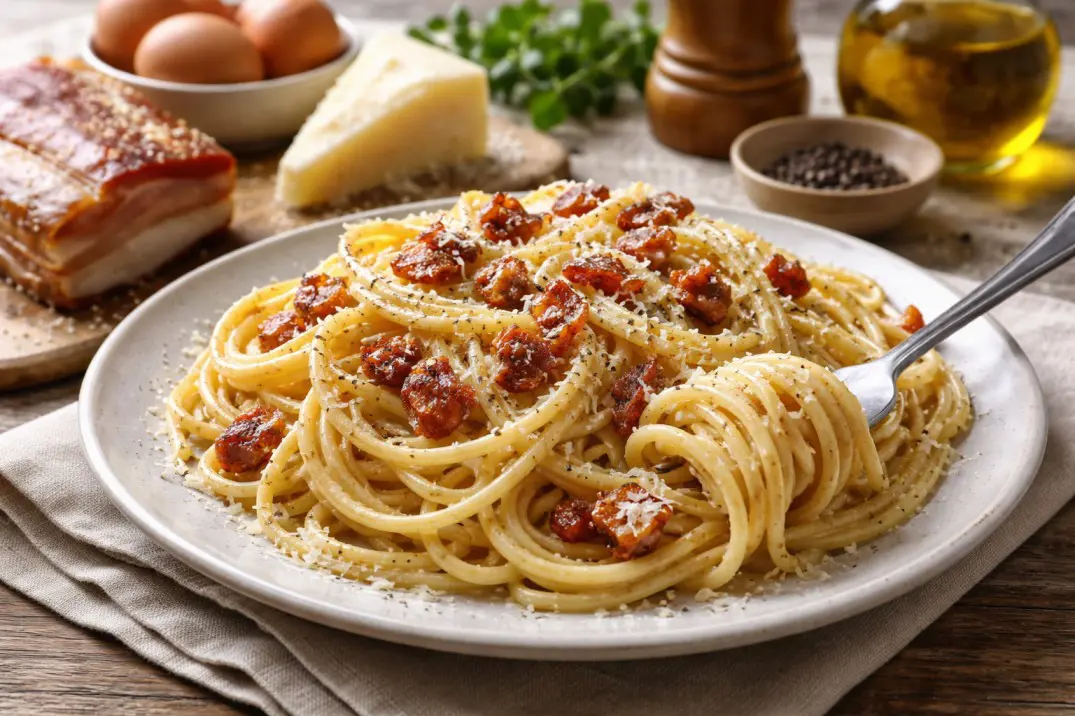
Carbonara is one of the most loved Italian pasta dishes around the world. Creamy, rich, and packed with flavor, this simple recipe proves that a few quality ingredients can create something extraordinary.
If you’ve ever wondered how to make carbonara the traditional way, this guide will walk you through every step. From choosing the right pasta to mastering the silky sauce, you’ll learn how to make this classic dish perfectly every time.
Ingredients You’ll Need
Here are the traditional ingredients for authentic carbonara:
1. Pasta
Spaghetti is the most common choice, but you can also use rigatoni or fettuccine. Long pasta works especially well because it holds the sauce beautifully.
2. Guanciale
Guanciale is the traditional meat used in Roman carbonara. It has a rich, slightly sweet flavor and renders flavorful fat. If you can’t find it, pancetta is the next best option. Bacon can be used, but it will change the flavor slightly.
3. Eggs
Carbonara uses whole eggs or a mix of whole eggs and egg yolks. The yolks provide extra richness and help create that creamy texture.
4. Pecorino Romano Cheese
This salty, sharp sheep’s milk cheese is essential for authentic flavor. Freshly grated cheese melts better and blends smoothly into the sauce.
5. Freshly Ground Black Pepper
Black pepper is a key flavor component. Traditionally, carbonara is heavily seasoned with freshly cracked pepper.
Step-by-Step: How to Make Carbonara
Follow these simple steps to make a perfect carbonara.
Step 1: Boil the Pasta
Bring a large pot of salted water to a boil. Add the pasta and cook until al dente according to package instructions. Reserve about 1 cup of pasta water before draining.
The starchy pasta water is essential for creating the sauce.
Step 2: Cook the Guanciale
While the pasta cooks, dice the guanciale into small cubes. Place it in a cold skillet, then turn the heat to medium.
Cook slowly until the fat renders and the meat becomes crispy and golden. Do not add oil—the guanciale will release enough fat on its own.
Once cooked, remove the pan from heat and let it cool slightly.
Step 3: Prepare the Egg and Cheese Mixture
In a bowl, whisk together:
Mix until smooth and creamy. This will become your sauce base.
Step 4: Combine Pasta and Guanciale
Add the drained hot pasta directly into the skillet with the guanciale. Toss to coat the pasta in the rendered fat.
Make sure the pan is no longer over direct heat. This is crucial to prevent scrambling the eggs.
Step 5: Create the Creamy Sauce
Slowly pour the egg and cheese mixture over the hot pasta while tossing continuously.
Add a small amount of reserved pasta water and continue stirring quickly. The heat from the pasta gently cooks the eggs, forming a smooth and creamy sauce.
If the sauce seems too thick, add more pasta water a tablespoon at a time until silky and glossy.
Tips for Perfect Carbonara
Making carbonara is simple, but technique matters. Here are some expert tips:
1. Work Quickly
The pasta must be hot enough to cook the eggs gently, but not so hot that they scramble.
2. Remove from Direct Heat
Always take the pan off the burner before adding the egg mixture.
3. Use Freshly Grated Cheese
Pre-grated cheese doesn’t melt as smoothly and may create a clumpy sauce.
4. Don’t Add Cream
Authentic carbonara relies on eggs and cheese for creaminess. Adding cream changes the traditional recipe.
5. Season Carefully
Because Pecorino and guanciale are salty, taste before adding extra salt.
Common Mistakes to Avoid
Even experienced cooks can make small mistakes with carbonara. Here’s what to watch for:
-
Scrambled eggs: This happens if the pan is too hot.
-
Dry pasta: Not enough pasta water was added.
-
Bland flavor: Use high-quality cheese and plenty of black pepper.
-
Overcooked pasta: Always cook pasta al dente for best texture.
Variations of Carbonara
While traditional Roman carbonara is simple, you can try a few variations:
Chicken Carbonara
Add grilled or sautéed chicken for extra protein. While not traditional, it’s a popular twist.
Mushroom Carbonara
Sauté mushrooms with the guanciale for added depth and earthiness.
Vegetarian Version
Replace guanciale with sautéed mushrooms or smoked vegetables for a meat-free option.
Keep in mind that once you change the ingredients significantly, it’s no longer authentic Roman carbonara—but it can still be delicious.
How to Serve Carbonara
Carbonara is best served immediately while warm and creamy. Garnish with:
-
Extra grated Pecorino Romano
-
Freshly cracked black pepper
-
A drizzle of olive oil (optional)
Pair it with a simple green salad or crusty bread for a complete meal.
Final Thoughts
Learning how to make carbonara is about mastering simplicity. With just a few high-quality ingredients and proper technique, you can create a dish that tastes like it came straight from Rome.
The key is controlling the heat and using pasta water to achieve that silky texture. Once you’ve made it a few times, you’ll see that carbonara isn’t complicated - it’s simply about balance and timing.
Now that you know how to make carbonara, gather your ingredients and give it a try. With practice, you’ll be serving restaurant-quality pasta right from your own kitchen.